Research Article
Culture of Whiteleg Shrimp Under High Salinity During the Rainy Season at Dugarajupatnam, Andhra Pradesh, India 
 ,
Jagadish Naik Mude
 Author Correspondence author
International Journal of Aquaculture, 2026, Vol. 16, No. 5
Received: 05 Aug., 2026 Accepted: 30 Sep., 2026 Published: 20 Oct., 2026
This study evaluated the culture performance, water quality, and economic returns of Litopenaeus vannamei reared in four 0.4-ha ponds (A1, A2, B2, and B4) at Dugarajupatnam, Andhra Pradesh, India, during the rainy season. Postlarvae (PL10) were stocked at 50 PL m-2 and fed a commercial diet containing 35%-42% crude protein four times daily. Water quality was monitored at 15-day intervals throughout the 105-day culture period. Final average body weight ranged from 15.92 to 16.74 g, survival from 88% to 95%, production from 2,348.45 to 3,013 kg, and feed conversion ratio from 1.25 to 1.36. Pond B2 showed the lowest feed conversion ratio, whereas Pond B4 achieved the highest production and net profit. The findings provide practical information for managing high-salinity culture of L.vannamei during the rainy season in coastal Andhrapradesh.
1 Introduction
One of the fastest-growing food production industries in the world is aquaculture, and the production of shrimp, especially L.vannamei is crucial to supplying the growing demand for seafood around the world. However, severe issues like declining water quality, organic waste buildup, disease outbreaks, and decreased feed efficiency frequently confront intensive shrimp cultivation systems (Kumar et al., 2018; FAO, 2022). 44.1% of all fish production came from aquaculture, which is the world's fastest-growing food production industry (FAO, 2000). India is currently the world's second-largest producer of fish and second-largest aquaculture nation. Aquaculture's quick growth as a way to satisfy the world's need for seafood has made the creation of ecologically friendly and sustainable production methods necessary. Because of high stocking densities, and ability to adapt to a wide range of salinities, L.vannamei often known as Pacific white shrimp, has become one of the most economically significant species among those cultivated globally (Gamberoni et al., 2025).
The species is a mainstay of contemporary aquaculture operations due to rapid growth rate and great production efficiency; worldwide production has reached previously unheard-of levels (Tian et al., 2024). Although L. vannamei can tolerate a broad salinity range, seasonal fluctuations in salinity may affect growth, feed utilization, survival, and pond management The need for shrimp feed is rising due to the shrimp industry's explosive growth. Feed expenses can account for up to 50%-60% of the overall cost of shrimp farming. (Krishna et al., 2015). Between 2010-2011 and 2017-2018, the nation’s export production of L.vannamei rose from 18247 to almost 4, 00,000 metric tonnes (MPEDA, 2017). Scampi, a freshwater prawn that was introduced in 1999 as a substitute for P. monodon, also encountered disease issues.
Information on the culture performance of L.vannamei under high-salinity seawater conditions during the rainy season in Dugarajupatnam remains limited. Therefore, this study evaluated water quality, growth performance, survival, production, feed conversion ratio, and economic returns during a 105-day commercial culture cycle.
2 Materials and Methods
The study was conducted from June to October 2025 during the rainy season in four commercial L. vannamei ponds at Dugarajupatnam village, SPSR Nellore District, Andhra Pradesh, India (Figure 1). The Tejaswani hatchery from hatchery Kakinada district, Andhra Pradesh, provided the Kona bay seed used in the study. The months of June through October are when the prawn culture takes place. The shrimp were cultured in rectangular ponds under relatively high-salinity conditions. The ponds’ density, survival, growth, productivity, and water quality characteristics were also investigated. The shrimp were fed four times per day at 6:00 a.m., 10:00 a.m., 2:00 p.m., and 6:00 p.m. The feed crumble and pellet was used with 35%-42% protein were employed in the artificial diet. Seed costs 0.35 rupees each piece, while feed purchase costs Rs 85 per kilogram.
 Figure 1 Location map of the study area (Dugarajupatnam) |
2.1 Study area and culture period
2.1.1 Preparation of the pond
The selected ponds for shrimp farming are created from agricultural rice fields. The excavated pond and its bottom are covered with a substantial amount of lime powder, about 3-4 MT/hectare. Applying lime to raise pH and decrease turbidity. The cultivation pond's bottom is allowed to dry and fracture after harvest, which boosts the hydrogen sulfide's capacity and gets rid of microbes and other predators. Particularly in areas with high concentrations of organic black dirt, the pond bottom is scraped up to 3-4 inches. They remove and discard the black sediments that scrape off the pond's edge. The pond bottom is then plowed down to a depth of 30 cm to totally eliminate the hazardous gases in the soil. Quick lime, agricultural lime, and dolomite were employed. After that water is pumped into the pond. The pond water was conditioned with jajjery juice before stocking.
2.1.2 Stocking density
Seed collected from Tejaswani hatcheries, the L. vannamei seed was provided from the CAA-certified Vemavaram village in Kakinada district, Andhra Pradesh, India. After quality and PCR testing, L. vannamei postlarvae PL10 are acquired from shrimp hatcheries. They are packed in a carton and transported in double-layered, oxygenated polythene bags with crushed ice packs sandwiched between the inner and outer covers. To control the temperature, the seeds were placed in bags in the pond water for a period after being delivered to the farm. After adjusting the pH and salinity of the seed bag with pond water, the seeds were progressively released into the ponds.
2.1.3 Acclimatization
Shrimp farmers typically adapt postlarvae to pond water prior to stocking. To help the seed adjust to the pond's habitat, it was submerged in the water. In order to prevent shrimp from experiencing a temperature or salinity shock, acclimatization in shrimp farming typically entails gradually adding pond water to the water in which the postlarvae have been borne.
2.1.4 Aeration
In pond water is treated by pedal wheel aerators to address DO issues; four peddle wheelers hold the aerator, and four aerators keep up with each corner. Two-horsepower paddle wheel aerators are installed in ponds corners. There are sixteen aerators in all in the pond. The aerators run for eight to twelve hours every day during the culture period. The aerators are turned ‘on’ and then ‘off’ for two hours of feeding. Every pond contains a paddle wheel aerator to boost the water column's dissolved oxygen content based on biomass. The distance between the aerators and the dykes is around ten feet.
2.1.5 Water Exchange
The water level has been maintained between 5 to 6 fts during the cultivation season by pumping water into the pond from sea using a PVC pipe to make up for seepage, evaporation, and other losses.
2.1.6 Sampling
The first sampling was conducted in all ponds at the 30 DOC stage of the culture, and the average body weight and number of individuals were noted. Every two weeks, early in the morning, cast net sampling is done in the pond. Each pond produces two or three hauls. The average body weight, infections, moults, survivals, healthiness, and other aspects of the shrimp's health are all monitored and evaluated. The procedure of sampling the shrimp using cast nets is used to measure the shrimp's growth during the culture period. The sampling procedure is carried out to determine the average body weight of the shrimps produced is compared across all the ponds. Throughout the season, the shrimp's relative growth was noted. During the culture period, shrimp samples are taken every fortnightly.
2.2 Experimental design, data collection, and statistical analysis
This study compared four commercial shrimp ponds managed under the same reported stocking density and routine farm practices. The ponds were observed under commercial culture conditions; no treatments were randomly assigned.
Shrimp were fed commercial feed four times a day during the culture phase. In addition to standard maintenance procedures like siphoning, aeration, and water exchange, daily pond management involved keeping an eye on the status of the shrimp and the pond. Shrimp performance and culture conditions were monitored through routine sampling.
Shrimp survival and feed quantity were noted, and data was gathered on a regular basis by counting and weighing the shrimp. Over the course of the investigation, shrimp behavior and health were also monitored.
Three main categories of parameters were assessed in the study: Average Body Weight (ABW), Average Daily Growth (ADG), Survival Rate (SR), and Feed Conversion Ratio (FCR) are growth performance metrics. pH, salinity, and dissolved oxygen (DO) are indicators of water quality.
Economic factors included cost per kilogram of shrimp, gross profit, net profit, total revenue, and total cost of production. Data from the four commercial ponds were summarized descriptively; no inferential statistical comparisons were performed.
3 Results
The study evaluated water quality, growth performance, production, and economic returns of L. vannamei cultured in four ponds over a 105-day rainy-season production cycle. Three key water-quality parameters, pH, salinity, and dissolved oxygen (DO), were monitored in four shrimp culture ponds (A1, A2, B2, and B4) on Days 1, 15, 30, 45, 60, 75, 90, and 105. Growth and economic indicators, including stocking data, survival rate, average body weight (ABW), average daily growth (ADG), feed use, production, expenditure, and profit, were also recorded. The water-quality results for Pond A1 are presented in (Table 1) and (Figure 2), those for Pond A2 in (Table 2) and (Figure 3), those for Pond B2 in (Table 3) and (Figure 4), and those for Pond B4 in (Table 4) and (Figure 5). The production and economic performance of the four ponds are summarized in (Table 5).
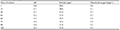 Table 1 Water quality parameters (Pond A1) Note: Values are recorded observations at each sampling time |
 Figure 2 Water quality parameters (Pond A1) |
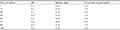 Table 2 Water quality parameters (Pond A2) Note: Values are recorded observations at each sampling time |
 Figure 3 Water quality parameters (Pond A2) |
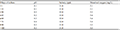 Table 3 Water quality parameters (Pond B2) Note: Values are recorded observations at each sampling time |
 Figure 4 Water quality parameters (Pond B2) |
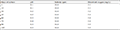 Table 4 Water quality parameters (Pond B4) Note: Values are recorded observations at each sampling time |
 Figure 5 Water quality parameters (Pond B4) |
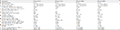 Table 5 Economic status of L. vannamei culture in rainy season Note: WSA, water-spread area; DOC, days of culture; ABW, average body weight; ADG, average daily growth; FCR, feed conversion ratio |
3.1 Water quality parameters
All four ponds’ water quality stayed largely constant over the culture period. The pH ranged from 8.0 to 8.4, suggesting slightly alkaline conditions that are ideal for the cultivation of L. vannamei. Salinity remained between 30 and 32 ppt throughout the culture period. Dissolved oxygen increased gradually from approximately 5.0-5.1 mg/L at the beginning of the culture period to 5.5 mg/L at harvest. Overall, the experiment’s recorded water quality indicators stayed within the permissible range, indicating that the environment was conducive to the growth and survival of shrimp. The water-quality data for Ponds A1, A2, B2, and B4 are shown in Tables 1-4 and Figures 2-5, respectively.
3.2 Growth and production performance
Growth and production performance are summarised in Table 5. Survival ranged from 88% to 95%, production from 2,348.45 to 3,013 kg, and net profit from Rs. 258,329.5 to Rs. 391,690. Pond B2 had the lowest FCR, whereas Pond B4 had the highest production and net profit.
3.3 Economic analysis
Pond B4 generated the highest total profit (Rs. 391,690), whereas Pond A2 showed the lowest total profit (Rs. 258,329.5). Overall, according to the study, during the 105-day culture period, high survival (88-95%) and satisfactory shrimp growth were observed alongside the recorded water quality conditions (pH 8.0-8.4, salinity 30-32 ppt, and DO 5.0-5.5 mg/L). Pond B2 had the best feed efficiency (FCR 1.25) of the four ponds, but Pond B4 had the best overall economic performance, generating 3013 kg of shrimp with the highest net profit (Rs. 391,690). These findings suggest that relatively stable water quality and feed utilization may have contributed to the observed production and economic performance of L.vannamei.
4 Discussion
4.1 Water quality parameters
Throughout the 105-day production cycle, the measured water-quality parameters remained within ranges considered suitable for the culture of L.vannamei. The recorded pH (8.0-8.4), salinity (30-32 ppt), and dissolved oxygen (5.0-5.5 mg/L) indicated relatively stable pond conditions suitable for shrimp growth and survival. These conditions may have contributed to the favourable growth and survival observed during the culture period.
Boyd et al. (2022) reported similar results, concluding that steady water quality reduces environmental stress and creates ideal conditions for maximum shrimp production. Similarly, Ahmad et al. (2023) noted that L.vannamei's health and performance are greatly enhanced by maintaining pH between 7.5 and 8.5, salinity according to culture conditions, and dissolved oxygen over 5 mg/L.
4.2 Growth performance and feed conversion ratio
The favourable culture conditions were also reflected in the growth performance of the shrimp. While the average daily growth (ADG) stayed consistent at 0.15 g/day across all ponds, the average body weight (ABW) varied from 15.92 to 16.74 g. The feed conversion ratio (FCR), which showed effective feed use, varied from 1.25 to 1.36. The observed final body weights were comparable to those reported for whiteleg shrimp cultured under similar conditions during the winter season (Ravuru, 2015). Pond B4 had the highest production 3013 kg, while Pond B2 had the lowest FCR (1.25), indicating effective feed consumption. These findings align with those of Li et al. (2022), who found that steady environmental conditions enhance shrimp development, feed conversion, and digestive efficiency.
4.3 Survival rate and production performance
Pond B4 generated the highest total production (3013 kg) and total profit (Rs. 391,690), while Pond A2 had the highest survival rate (95%). The observed differences may reflect variation among ponds under commercial management. According to Roy et al. (2020), production variations amongst ponds are often impacted by biological and managerial factors rather than environmental stress when water quality stays within ideal bounds. According to Puli et al. (2020). L. vannamei production 8337, 8932 and 9450kg in summer season.
4.4. Economic analysis
The economic analysis indicated positive returns from all four ponds under the reported culture conditions. The primary expense of production was feed, and higher economic returns were closely correlated with increased feed efficiency. Even though all of the ponds had comparable management techniques, Pond B4 made the most money. FAO (2024) states that the main factors influencing profitability in commercial shrimp farming are feed efficiency, survival, and harvest biomass. Additionally, Anand et al. (2023) found that in Indian L. vannamei culture systems, steady water quality and effective feed management significantly increase farm profitability and output sustainability.
The study is consistent with a number of recent studies that have shown how crucial constant water quality is to the success of shrimp farming. According to Panigrahi et al. (2021), keeping the pH between 7.8 and 8.5 and the dissolved oxygen over 5 ppm greatly improves shrimp development and survival. According to Zhang et al. (2023), stable pond settings enhance growth consistency and harvest output, while variations in water quality negatively impact feed conversion and production efficiency. In a similar vein, Davis et al. (2021) found that reduced FCR and greater economic returns result from effective feed management in conjunction with favorable environmental circumstances. Because no inferential statistical comparisons were performed, numerical differences among ponds should be interpreted descriptively. The findings suggest that stable water quality and appropriate feed management may support growth, survival, feed utilization, and economic performance in L. vannamei culture.
5 Conclusion
L.vannamei cultured in four commercial ponds under high-salinity conditions during the rainy season achieved survival rates of 88%-95%, final average body weights of 15.92-16.74 g, and feed conversion ratios of 1.25-1.36 over a 105-day culture period. Pond B2 showed the best feed conversion efficiency, whereas Pond B4 achieved the highest production and net profit. The findings provide baseline information for commercial L. vannamei farming under comparable high-salinity rainy-season conditions.
Acknowledgements
The authors sincerely thank the farmers and pond managers managing the culture ponds in Dugarajupatnam village, SPSR Nellore District, Andhra Pradesh, for providing facilities and support throughout the L.vannamei culture period.
Abbreviations
L.vannamei: Litopenaeus vannamei, WSA: Water spread area, DOC: Days of culture, SR: Survival rate, PL: Postlarvae, DO: Dissolved oxygen, ABW: Average body weight, ADG: Average daily growth, CAA: Coastal aquaculture authority, FCR: Feed conversion ratio.
Author Contributions
Danya Babu Ravuru contributed to conceptualization, methodology, data analysis, and original-draft writing. Jagadish Naik Mude contributed to conceptualization, methodology, data analysis, and supervision. Both authors reviewed and approved the final manuscript.
Conflict of Interest
The authors declare no conflict of interest.
Anand P.S.S., Kumar S., Panigrahi A., and Ghoshal T.K., 2023, Production performance and economic evaluation of commercial Pacific white shrimp (Litopenaeus vannamei) farming in India, Aquaculture Research, 54(8): 3127-3140.
Ahmad A., Kari Z.A., Romano N., and Ikhwanuddin M., 2023, Water quality management and its effects on the growth performance and survival of Litopenaeus vannamei: A review, Aquaculture Reports, 31: 101658.
Boyd C.E., Tucker C.S., and McNevin A.A., 2022, Water quality management practices for sustainable shrimp aquaculture, Aquacultural Engineering, 97: 102250.
Davis D.A., Samocha T.M., and Boyd C.E., 2021, Feed management and feed conversion efficiency in intensive culture of Litopenaeus vannamei, Journal of the World Aquaculture Society, 52(4): 812-826.
Food and Agriculture Organization (FAO), 2022, The State of World Fisheries and Aquaculture 2022, FAO, Rome.
Food and Agriculture Organization (FAO), 2000, The State of World Fisheries and Aquaculture 2000, FAO, Rome.
Food and Agriculture Organization of the United Nations (FAO), 2024, The State of World Fisheries and Aquaculture 2024: Blue Transformation in Action, FAO, Rome.
Gamberoni P., Wuertz S., Bierbach D., Bogner M., and Slater M.J., 2025, European perspectives on Litopenaeus vannamei aquaculture: An expert’s survey, Aquaculture Reports, 42: 102732.
Kumar P., Engle C.R., and Tucker C.S., 2018, Factors driving aquaculture production and shrimp farming in Asia: A cross-country analysis, Aquaculture Economics & Management, 22(2): 158-184.
Krishna P.V., Bhanu Prakash K., Hemanth K.V., and Prabhavathi K., 2015, Growth, survival and production of Pacific white shrimp Litopenaeus vannamei at different stocking densities under semi-intensive culture systems in Andhra Pradesh, International Journal of Advanced Research, 3(9): 446-452.
Li E., Wang X., Chen K., Xu C., Qin J.G., and Chen L., 2022, Environmental regulation of growth performance and physiological responses in Pacific white shrimp (Litopenaeus vannamei), Aquaculture Reports, 24: 101142.
MPEDA, 2017, Press Release, 2 July 2017, Marine Products Export Development Authority, Kochi.
Puli R. et al., 2020, Culture of Litopenaeus vannamei of brackish water in summer season with artificial diet, Asian Journal of Biological and Life Sciences, 9(2): 200-203.
Panigrahi A., Sundaray J.K., Kumar S., Ghoshal T.K., and Das R.R., 2021, Influence of environmental parameters on growth and health of Pacific white shrimp cultured in intensive production systems, Aquaculture International, 29(6): 2471-2488.
Ravuru J.N.M.D.B., 2015, Growth of cultured whiteleg shrimp Litopenaeus vannamei (Boone, 1931) of brackish water culture system in winter season with artificial diet, Journal of Aquaculture Research & Development, 6(2).
Roy L.A., Davis D.A., Saoud I.P., Boyd C.E., Pine H.J., and Boyd C.A., 2020, Shrimp culture in inland low-salinity waters, Reviews in Aquaculture, 12(4): 2344-2362.
Tian J., Zhou L., Wang X., and Liu Y., 2024, Development dilemma of Litopenaeus vannamei industry in China: Current countermeasures taken and its implications for the world shrimp aquaculture industry, International Journal of Aquaculture, 4(1): 20-45.
Zhang M., Wang Y., Li E., and Chen L., 2023, Effects of water quality stability on feed utilization and production performance of Pacific white shrimp (Litopenaeus vannamei), Aquaculture Reports, 29: 101520.



. HTML
Associated material
. Readers' comments
Other articles by authors
. Danya Ravuru

. Jagadish Mude
Related articles
. L. vannamei
. pH
. Salinity
. Dissolved oxygen
. Growth performance
. Production performance
. Economic analysis
Tools
. Post a comment